

Cruise Travel Insurance Explained: What It Covers, What It Doesn't & Why It Matters

Cruise Travel Insurance Explained: What It Covers, What It Doesn't & Why It Matters
When severe weather changes your cruise itinerary, knowing what your insurance policy actually covers can make a meaningful difference.
Nobody books a cruise dreaming about insurance paperwork. We research ships, choose staterooms, plan shore excursions, and anticipate the experiences waiting at each destination. But sometimes the weather has other plans.
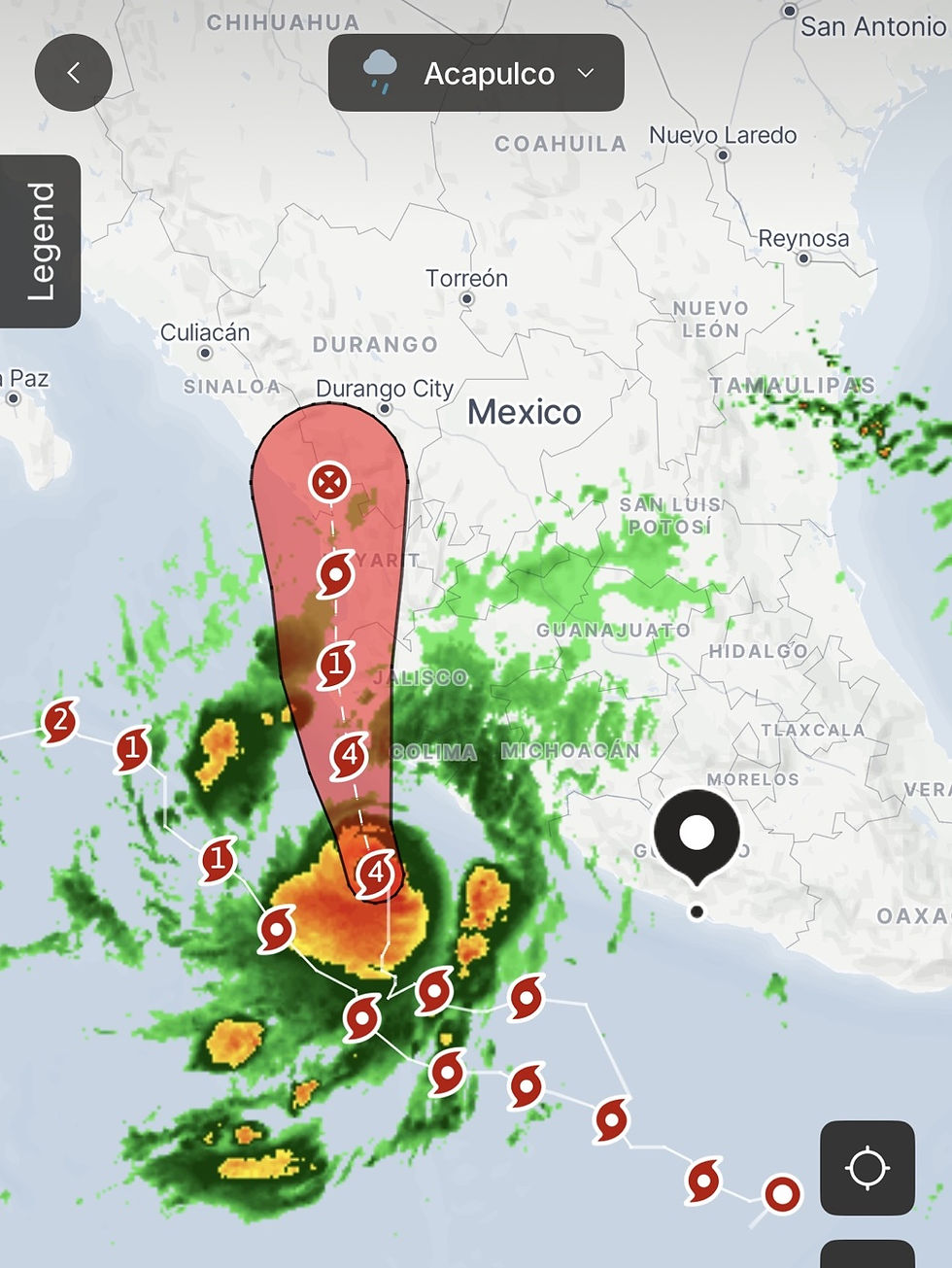
During our 16-night Panama Canal sailing aboard Norwegian Joy in October 2026, Hurricane Simon prompted an itinerary change, including the cancellation of our planned Acapulco call. It was a timely reminder that a cruise line's decision to change ports and an insurance company's decision to pay a claim are two different things.
Historical weather image: The map below is a screenshot of a forecast displayed during our October 2026 sailing. It is not a current storm advisory.
Does travel insurance cover a missed cruise port?
Not automatically. Cruise lines may alter itineraries for safety or operational reasons. A standard trip interruption benefit generally does not reimburse you solely because the ship skipped a destination. Some policies include narrowly defined itinerary-change, missed-port, or travel-inconvenience benefits. Check the qualifying circumstances, minimum delay, proof required, exclusions, and benefit limits. Also review any compensation or refund provided directly by the cruise line.
Trip interruption: when your own trip is cut short
Trip interruption coverage may reimburse eligible unused, prepaid, nonrefundable travel expenses if you must end a trip early for a covered reason. Depending on the policy, it may also help with additional transportation expenses. A ship continuing its voyage on a modified route is not the same as a passenger ending their trip early.
Medical coverage abroad and onboard
Cruise ship medical services are generally billed separately. Coverage under U.S. health plans while abroad varies by insurer and plan. Original Medicare generally does not cover care outside the United States, with limited exceptions. Before departure, confirm your emergency medical limits, deductibles, exclusions, whether treatment must be paid upfront, and how claims are submitted.
Emergency medical evacuation
A serious illness or injury may require transfer from the ship to an appropriate medical facility. Such transportation can be expensive. Compare medical evacuation limits, insurer assistance arrangements, approval requirements, and whether the benefit transports you to the nearest suitable facility or somewhere else. Never assume evacuation to a hospital of your choice is included.
Missed embarkation and travel delays
A delayed flight or other covered disruption can cause a traveler to miss embarkation. Some policies provide missed-connection or travel-delay benefits, but the required delay duration, eligible reasons, maximum payout, and covered transportation differ. Build in a pre-cruise arrival buffer whenever practical; insurance is not a substitute for realistic travel planning.
Timing matters: buy before a problem is foreseeable
Some policies offer time-sensitive benefits, such as a waiver of certain pre-existing medical condition exclusions, when you purchase within a specified window after your first trip payment and satisfy other conditions. The deadline is not universal: read the actual policy. Known or foreseeable events may be excluded from newly purchased coverage.
Annual or single-trip travel insurance?
We have relied on annual travel insurance for years because we travel frequently. An annual policy can be convenient and potentially economical, but it may provide different cancellation benefits, per-trip maximums, medical limits, and maximum trip lengths from a single-trip policy. Compare coverage against your own travel frequency, trip costs, and health-insurance situation—not just the premium.
A practical cruise insurance checklist
Before purchasing, confirm: covered cancellation and interruption reasons; missed-port or itinerary-change benefits, if any; emergency medical and evacuation limits; travel delay and missed-connection requirements; pre-existing condition provisions; annual-plan trip limits; exclusions; documentation requirements; and the insurer's emergency assistance number.
Cruise smarter, travel more confidently
Hurricane Simon reinforced an important lesson during our Norwegian Joy voyage: preparation matters as much as the destination. Travel insurance cannot prevent an itinerary change, but an appropriate policy may reduce the financial impact of qualifying emergencies. Understand what it covers—and what it does not—before you sail.
For additional guidance, see the National Association of Insurance Commissioners (content.naic.org) and Medicare's explanation of coverage outside the United States (medicare.gov/coverage/travel-outside-the-u-s).
MiAs World Of Travel | Explore • Experience • Repeat
Educational information only. Benefits, exclusions, eligibility, and claim decisions depend on the specific policy and circumstances. Weather imagery is historical, not a live forecast.


Comments